We have shipped the systems we now rescue.
Two senior partners. Rohit Chikballapur runs the rescue work for enterprises whose AI investment is under scrutiny, and for AI product companies whose flagship deployments need to hold. Sushobhan Mukherjee runs our transformation and change management practice. Between them: seven years of industrial AI in the field and thirty years of brand strategy.
A senior specialist in the domain you need.
Raining Code is two senior partners. The shared discipline is the rescue motion — diagnosing where an AI investment actually stands, building the verification layer it shipped without, and staying embedded until the value is measured. Rohit runs that work for enterprises and AI product companies alike; Sushobhan runs the separate brand and demand practice. You work with the one whose domain you need, backed by the other when the problem crosses lines, which it usually does.
Each of us has run our domain inside an operating company, with AI brought in where it earned its place. One method across the practice. No handoff to anyone junior.
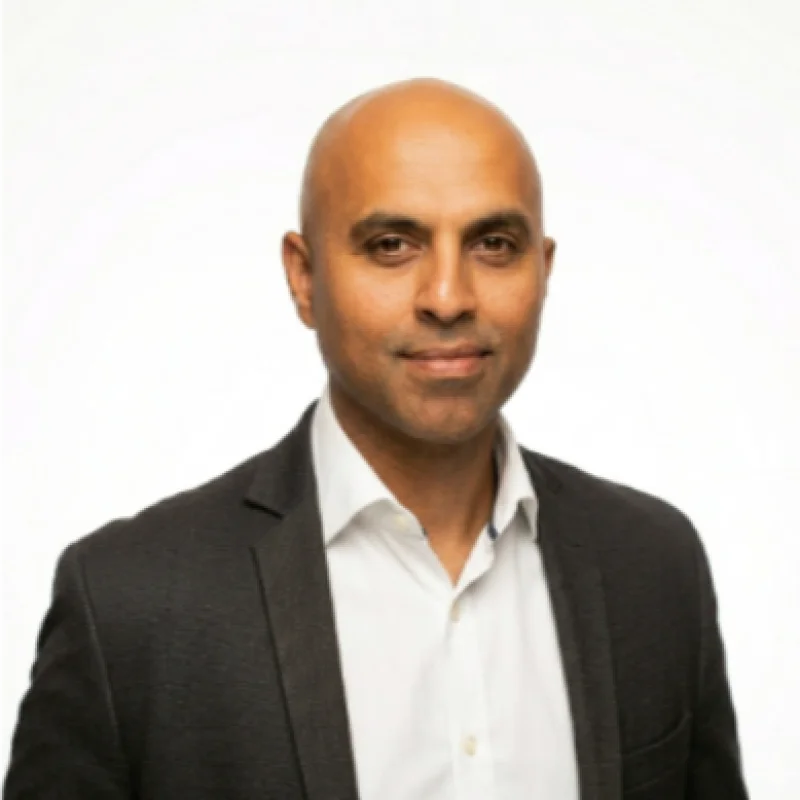
Rohit Chikballapur
Founder · Rescue & Delivery · Basel
Basel 🇨🇭 · Paris 🇫🇷 · Hamburg 🇩🇪
Rohit leads the rescue discipline. Seven years building industrial AI at Facterra: IoT and asset intelligence deployed into manufacturing plants across the DACH region and France. He built the commercial motion that sold it, then lived the part most firms never see: deployment, calibration, and the after-sales relationship that decides whether an account renews and grows or quietly leaves — the same point in the lifecycle where an AI investment either proves out or fails unnoticed. His advisory work includes a cross-border wealth platform, where the engagement began with user research into why existing tools failed globally mobile professionals and concluded with the AI-native architecture that now underpins the product.
Before Facterra he incubated digital services inside Schneider Electric. That is where the pattern first became clear: across large industrial groups, AI pilots start well and then quietly wind down, and the model is almost never the reason. What fails is the verification, the adoption, the service motion — everything built around it.
He founded Raining Code to build the practice he would have hired when his own initiatives stalled. He advises in English, French, and German, covers European engagements, and takes on a small number a year. If you work with Raining Code in Europe, he is in the room.
- Diagnosis: where an AI investment actually stands, and what is recoverable
- The harness: verification that lives outside the model
- Deployment, calibration, and adoption that hold in the field
- EN / FR / DE — European engagements
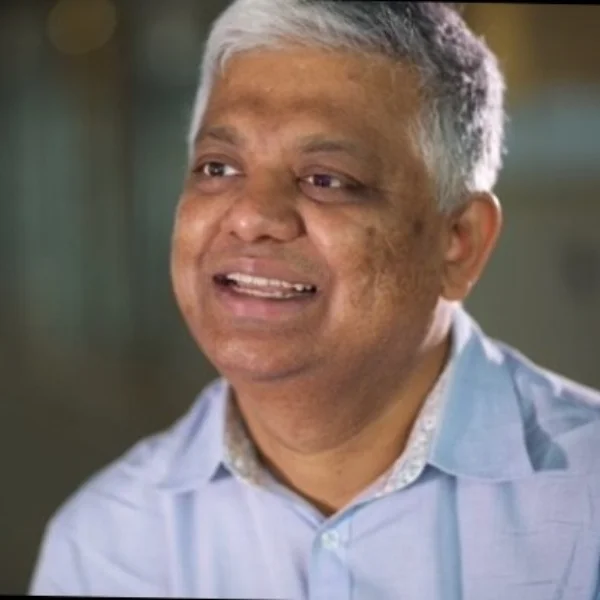
Sushobhan Mukherjee
Partner · Brand & Demand · Basel
Basel 🇨🇭 · Singapore 🇸🇬 · Mumbai 🇮🇳
Sushobhan leads the separate brand and demand practice — a distinct line from the rescue work, for firms whose question is how they are seen and found rather than whether an AI investment is delivering. Thirty years in brand strategy and digital design at enterprise scale, most recently as AVP Digital Design and Strategy at Infosys in Basel. He has run brand architecture and commercial positioning for global enterprises across Asia, Europe, and North America, and his benchmark is whether the work converts.
Grand Effie. Jay Chiat Award for Strategic Excellence. Multiple Asian Marketing Effectiveness Awards: prizes for brand strategy that changed commercial outcomes. Before Infosys he co-founded Dealstreetasia.com, a financial intelligence platform acquired by the Financial Times. IIM Lucknow. Three decades across Singapore, Mumbai, New Delhi, and Basel.
His sharpest work now is answer-engine positioning: making sure that when a buyer asks an AI assistant who to consider, the market and the machine both name you, and describe you the way you would describe yourself. If the question is whether your position will hold and your story will move buyers, that is where Sushobhan anchors.
- Brand architecture and market positioning
- Commercial narrative that moves a sceptical buyer
- Answer-engine positioning — getting named by AI assistants
- Enterprise brand strategy across Europe, Asia, and North America
A senior partner in your market. The full bench behind them.
You work with one partner: the one whose domain you need, in your market and your timezone. Behind them sits the rest of the practice: when a rescue crosses from the diagnosis into the harness build, or from an enterprise engagement into a delivery-arm one, the right person joins. We run every engagement on one method, refined across the production AI we have each run inside operating companies. What you buy is the practice's judgement, not one person's calendar. The person who scopes your engagement runs it.
We have built, shipped, and run production AI inside operating companies, on both sides of the Atlantic.
That is the credibility plank: shipped systems rather than advisor decks. The actual experience of putting AI in front of real customers and staying long enough to know what holds — and, just as often, watching it quietly stop being trusted. It is why we can tell you where an AI investment is recoverable, and where it is not.
Our pattern recognition runs deepest where the decisions are consequential and the forgiveness for a wrong answer is low: industrial and deal-driven B2B — manufacturing, chemicals, life sciences, components, energy, infrastructure — and regulated financial services. That is where the published proof sits. But the discipline is not industry-specific; it is the same wherever an AI investment is under scrutiny, including the AI product company whose enterprise deployment needs senior delivery to hold.
"Every AI initiative we've diagnosed had a model that worked. What it lacked was a check living outside the model, and someone whose job depended on the number it produced."